

Avenues for Justice
100 Centre Street, Room 1541
New York, NY 10013
info@avenuesforjustice.org
©Copyright 2022 Avenues for Justice. All rights reserved.


Ensure an individualized approach to working with youth and young adults: What sets AFJ apart is the personalized nature of our approach to working with young people. Each Participant receives an individualized action plan based on their specific needs. At AFJ, we integrate civic engagement into our programming and workshops by helping young people understand their rights, their power, and how they can be active participants in shaping their futures, all while keeping them safe (especially as they navigate active cases).
For someone who wants to set aside money to establish a Philanthropic Foundation or Fund, what does it take to make sure your resources are being impactful and truly effective? In this interview series, called “How To Create Philanthropy That Leaves a Lasting Legacy” we are visiting with founders and leaders of Philanthropic Foundations, Charitable Organizations, and Non-Profit Organizations, to talk about the steps they took to create sustainable success.
As a part of this series, I had the pleasure of interviewing Elizabeth “Liz” Frederick.
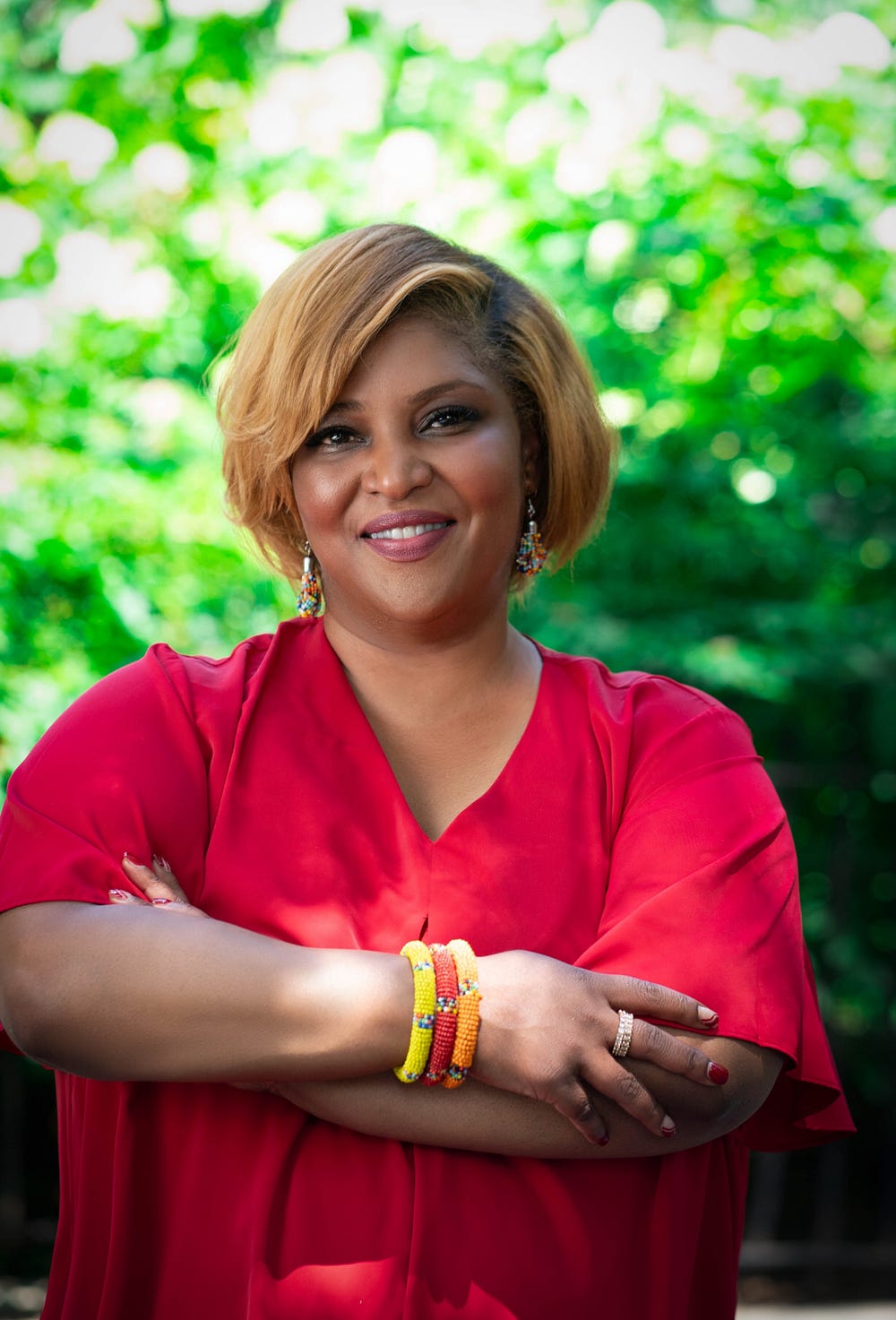
Nonprofit leader and youth justice reform advocate, Elizabeth (Liz) Frederick, became the Executive Director of Avenues for Justice (AFJ) in the summer of 2024, after 18 years of service to the historic organization. Starting her journey with AFJ in 2006 as a graduate student at John Jay College of Criminal Justice, Liz was initially curious about the gap between theory and lived experience. What began as a 30-minute meeting with Co-Founder Angel Rodriguez quickly turned into a two-hour mission-defining moment, revealing not only a career path, but a purpose. Nearly two decades later, Liz now leads the very movement that first inspired her.
Thank you for making time to visit with us about a ‘top of mind’ topic. Our readers would like to get to know you a bit better. Can you please tell us about one or two life experiences that most shaped who you are today?
When people ask what shapes me to lead with my whole heart, I think about my 13-year-old daughter, Isabella, fondly known as Bella. Her resilience, curiosity, and constant “what are your thoughts on this?” inspire everything I do. One week this past September, I found myself caring for Bella, who was homesick with the flu, making sure homework assignments were being completed while preparing for an upcoming board meeting, and managing tight deadlines. While parenting, I’m also in meetings, fighting for the resources our programs need — especially in the face of budget cuts to youth services and criminal justice organizations.
I am also driven by the countless mothers, guardians, and community members who carry so much while holding space for others. I’m especially moved by the mothers on our Program Team, who balance raising their own children while supporting our Participants like family. And I hold deep respect for the women within our Participant community, who are raising children while navigating their own growth and transformation. Their strength reminds me daily of the power of community and the importance of lifting each other up.
You are a successful leader. Which three character traits do you think were most instrumental to your success? We would love to hear a few stories or examples.
Being a Black woman leading a criminal justice nonprofit is a responsibility I carry with deep intention. My identity informs how I show up as a leader, grounded in the understanding of what it means to navigate systems not built for people like me or the young people we serve. I’m aware of the unspoken expectations placed on Black women leaders to carry everything with strength and grace. I’ve had to learn that resilience doesn’t mean going at it alone. I intentionally seek out spaces, peer circles, and mentorship groups where I can give and receive support.
Because of these lessons, I am also aware of and sensitive to the needs of our team and remain committed to their growth and professional development. A core priority in my leadership has been investing in our staff. Our team reflects the communities we serve; many have lived experience with the same systems our youth are navigating. This isn’t representation for optics; it’s representation for outcomes. When Participants walk into our centers, they’re met with people who see their full potential. I lead with the belief that those doing the work deserve the same care and investment as the young people they support.
At the top of this year, I brought in an organizational partner to facilitate a two-day staff training focused on refining our values and ensuring alignment with our mission and vision. More recently, we hosted a follow-up session to further strengthen our organizational culture. These efforts reflect my commitment to fostering shared purpose, clarity, and belonging within our team.
As a mother to my 13-year-old daughter, I’m mindful that how I lead shows her what’s possible for her. I want her to see that there’s space for women like us to lead boldly, be heard, and be supported. My identity doesn’t just shape my leadership; it fuels my commitment to building pathways for those too often left behind.
What’s the most interesting discovery you’ve made since you started leading your organization?
In my first year as Executive Director of Avenues for Justice, I stepped into leadership following our co-founder’s 45-year tenure. The first year of this transition also coincided with a 45-year anniversary celebration of the organization in 2024, a rapidly shifting policy and funding landscape that included budget cuts, shifting criminal justice priorities, and increasing resistance to DEI work. All of this occurred within the context of my lived experience as a Black woman, a factor that can compound the challenges faced by nonprofit leaders.
Leadership transitions can be challenging, especially when the leader is the organization’s co-founder. Leading during this time has meant navigating skepticism from both internal and external stakeholders. Internally, both staff and board needed time to adjust to a new leadership style; externally, I have had to reassert the organization’s credibility and my own. Rather than shrink in those moments, I leaned into my 20 years of experience at AFJ, drawing on both data and lived expertise to guide conversations with funders and partners and to reassure them about AFJ’s impact and the importance of our work for the future. I also helped center all our stakeholders around what matters most — our Participants and the power of our collective efforts to advance our crucial mission.
Can you please tell our readers more about how you or your organization intends to make a significant social impact?
AFJ’s model provides holistic, individualized support that centers each young person’s potential — not just their legal case. Headquartered in the Manhattan Criminal Courthouse, with community centers in Harlem and the Lower East Side, AFJ works with youth ages 13 to 24 from across New York City who are court-involved or at risk of involvement with the criminal justice system. In 2024, AFJ served 674 youth — 371 court-involved and 303 at-risk — from 42 of NYC’s 51 Council Districts.
AFJ’s current program includes the following:
Diversion & Court Advocacy: We provide direct advocacy to help participants avoid incarceration by working closely with judges, district attorneys, and public defenders to secure alternative solutions. AFJ assesses the needs of young adults entering court, advocates for their participation in our program instead of incarceration, and develops individualized action plans. Our Court Advocates are present in Supreme, Criminal, and Family Courts across the five boroughs. Judges, prosecutors, defense attorneys, probation officers, and court resource coordinators trust AFJ as an effective ATI provider, regularly referring participants to our program.
HIRE Up — Job Readiness, Workforce Development & Education: Many AFJ participants face educational gaps and lack sustainable career pathways. AFJ’s HIRE Up program provides workforce training, educational services, digital and financial literacy, legal rights education, and mental and physical health support. The program operates through a hybrid online and onsite model at our three locations: the Manhattan Criminal Courthouse and community centers in Harlem and the Lower East Side.
AFJ’s model is proven, cost-effective, and centered on long-term outcomes:
What makes you feel passionate about this cause more than any other?
Our whole-person approach means AFJ doesn’t just intervene at the point of crisis — we provide sustained support that disrupts cycles of incarceration and creates pathways to long-term success. Through trauma-informed services, individualized planning, and deep community trust, AFJ continues to serve as a vital force for youth justice and equity in New York City.
Without naming names, could you share a story about an individual who benefitted from your initiatives?
Participant Max joined AFJ through our Family Court Diversion program. Although his mandate with AFJ ended months ago, he remains actively involved, attending workshops in Teen Empowerment, Leadership Council, and Debate Team. Max has also earned multiple certifications, including OSHA-30, Site Safety, Scaffolding, and Flagging.
This past June, AFJ staff attended Max’s graduation from the Williamsburg School for Architecture and Design. His excitement is infectious as he looks ahead to college and his career.
“Getting my diploma means taking the next step in life and finally maturing. Graduating from high school has prepared me for getting ready for work and whatever may come with college,” said AFJ Participant, Max.
This fall, Max is attending Kingsborough Community College to major in tourism and hospitality. A lifelong transit enthusiast, with support from AFJ’s Job Developer, Shantel, Max is making connections with people at the Metropolitan Transportation Authority (MTA) and is preparing to take the MTA exam. Max will continue engaging with AFJ as he embarks on this exciting new chapter in his life.
We all want to help and to live a life of purpose. What are three actions anyone could take to help address the root cause of the problem you’re trying to solve?
My call to action is this: to funders, donors, supporters, and individuals looking to live a life of purpose — engage equitably. Trust Black-led organizations. Support strategies that dismantle systemic inequities at their root. To individuals, know that giving at any level matters. Philanthropy is not only about foundations and wealthy donors; it is about people coming together to invest in change. At AFJ, we want to partner with individuals who share our values and vision — people who believe in prevention, in equity, and in creating pathways of opportunity for young people of color. Every contribution, no matter the size, moves this vision forward.
Together, we can dismantle the oppressive systems that still shape the lives of our young Black and Brown participants. And together, we can build communities where young people are free to grow, learn, and lead. Kat Estrella, whom we honored at our 2025 Impact Awards Dinner on October 23rd, is a program graduate whose journey represents everything AFJ fights for. Kat’s story reminds us that when given the chance, our young people don’t just survive — they soar. Kat is an example of the future we’re building.
At AFJ, our vision is clear: to keep youth out of prison and put them on pathways to success. We are cultivating philanthropic partners — foundations and individuals alike — who share this vision. The time is now.

Based on your experience, what are the “5 Things You Need To Create A Successful & Effective Nonprofit That Leaves A Lasting Legacy?” Please share a story or example for each.
I’ve learned that prioritizing peer learning and community isn’t a luxury; it’s essential for sustainable leadership, especially as a BIPOC leader in this space. The isolation that comes with executive leadership can be particularly challenging when you’re one of the few Black women leading criminal justice organizations, so I view participation in learning networks as a critical infrastructure for my effectiveness.
I would prioritize leaving a lasting legacy by:
1. Ensure an individualized approach to working with youth and young adults: What sets AFJ apart is the personalized nature of our approach to working with young people. Each Participant receives an individualized action plan based on their specific needs. At AFJ, we integrate civic engagement into our programming and workshops by helping young people understand their rights, their power, and how they can be active participants in shaping their futures, all while keeping them safe (especially as they navigate active cases).
2. Provide safe spaces for young people to learn about the systems affecting their lives — they are eager to engage: The key factors that motivate youth to take action include: The key factors that motivate youth to take action include:
3. Creating boundaries as a leader: Just as I’ve learned to stop asking for permission to lead, I’ve had to learn to protect time for my own growth and development. It is necessary to block dedicated time for executive coaching, peer learning, wellness care, and network activities, and treat them as non-negotiable commitments to your leadership development.
4. Leveraging your team: Part of sustainable leadership is building systems that don’t require my constant presence. I’ve been investing heavily in my team’s development and mental health, which creates space for me to engage in learning opportunities that ultimately benefit the entire organization. At the top of this year, I brought in an organizational partner to facilitate a two-day staff training focused on refining our values and ensuring alignment with our mission and vision. More recently, we hosted a follow-up session to further strengthen our organizational culture. These efforts reflect my commitment to fostering shared purpose, clarity, and belonging within our team.
5. Celebrate wins with your community: The communities that AFJ serves encourage us to celebrate our wins. When I recently shared our 30% increase in HIRE Up workshop attendance and new internship partnerships with BIPOC-owned businesses, their support reminded me to pause and recognize the progress we were making. It reinforced that leadership isn’t a solo journey. Growth happens in community, and when we share wisdom, challenges, and successes, we strengthen not only ourselves but the broader field working toward justice.
How has the pandemic changed your definition of success?
The most pressing challenge is sustainable fundraising in an increasingly difficult landscape. We’re seeing foundations shift away from justice-related programs, with some telling us they “think the crisis has passed,” while our data shows youth still face unjust rates of arrest and incarceration. I need strategic guidance on diversifying revenue streams and making the case for continued investment in alternatives to incarceration when political rhetoric is shifting toward “tough on crime” approaches.
I’m also navigating the challenge of scaling impact while maintaining the deeply relational, community-based model that makes AFJ effective. As we serve participants across all five boroughs, I want to ensure we don’t lose the intimacy and trust that define our work.
Finally, I’m working to address my own leadership sustainability. As a Black woman leader carrying the weight of this work while raising a daughter and managing an organization, my definition of success is setting boundaries and creating systems that don’t require me to be “Wonder Woman” every day.
How do you get inspired after an inevitable setback?
One pivotal moment was speaking at a NEXUS salon dinner, where I shared real stories of AFJ’s impact, leading to a new partnership opportunity for our youth and young adults. That moment affirmed what I’ve come to know: I don’t need to ask for permission to lead. As I transitioned into AFJ’s Executive Director, many people would tell me that building on my predecessor’s leadership and impact for the organization meant I had big shoes to fill. But one thing I knew to be true is that I wear my own shoes, not those of my predecessor, and when space isn’t made for my voice, I create new spaces that honor my leadership, my experience, and our community.
We are very blessed that very prominent leaders read this column. Is there a person in the world who you would like to talk to, to share the idea behind your non-profit? He, she, or they might just see this, especially if we tag them. :-)
The best FLOTUS there ever was — — -Michelle Obama!
In 2020, Michelle Obama shared a powerful message with 1,000 Black girls who attended the annual Black Girls Lead conference. She told them, “Don’t ever forget how much power you have… Some folks are going to try to tell you that you have to feel a certain way or act a certain way… We need you, all of you, exactly as you are.” Michelle, here at Avenues for Justice, we believe that where a young person starts off in life does not have to be the deciding factor of where their final stop will be. Support our work to ensure that our young female Participants have a safe, supportive stop on their journey to better outcomes for themselves.
You’re doing important work. How can our readers follow your progress online?
Go to our website at www.avenuesforjustice.org; follow us on social media; email me at efrederick@avenuesforjustice.org to set up a site visit at our courthouse offices inside the Manhattan Criminal Court Building or at one of our two community centers in Harlem or the Lower East Side.
Thank you for a meaningful conversation. We wish you continued success with your mission.