

Avenues for Justice
100 Centre Street, Room 1541
New York, NY 10013
info@avenuesforjustice.org
©Copyright 2022 Avenues for Justice. All rights reserved.


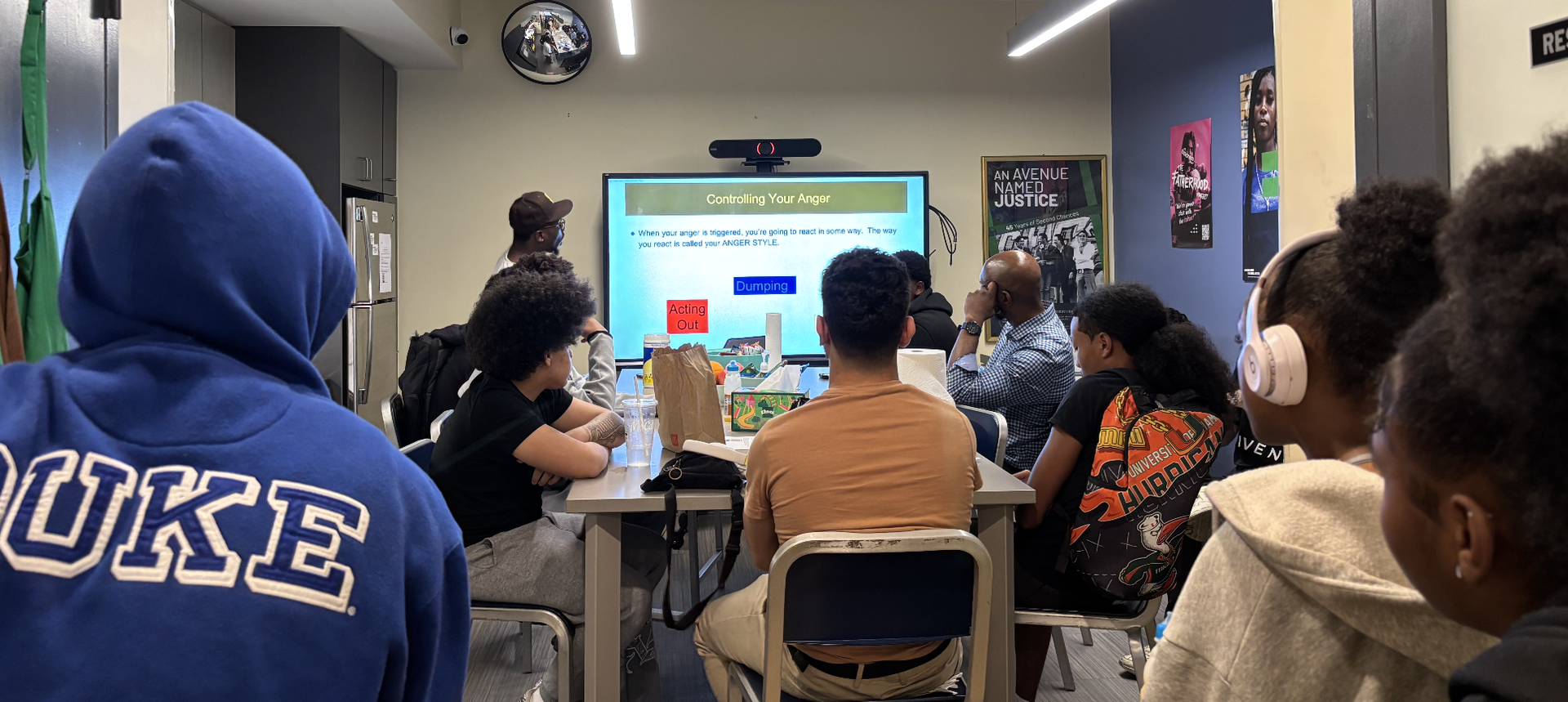
Every July, National Minority Mental Health Awareness Month, also known as BIPOC Mental Health Month, established in honor of author and advocate Bebe Moore Campbell, calls attention to the unique mental health challenges facing communities of color in the United States.
At Avenues for Justice (AFJ), this month is a continuation of the conversation in May, during Mental Health Awareness Month, where we examined how mass incarceration impacts the mental health of families and communities. We argued that Mental Health Awareness Month must address the systems driving a public health crisis. July asks us to go deeper: to look specifically at why Black and Brown communities carry a disproportionate share of this crisis, and why the systems meant to respond often fail them.
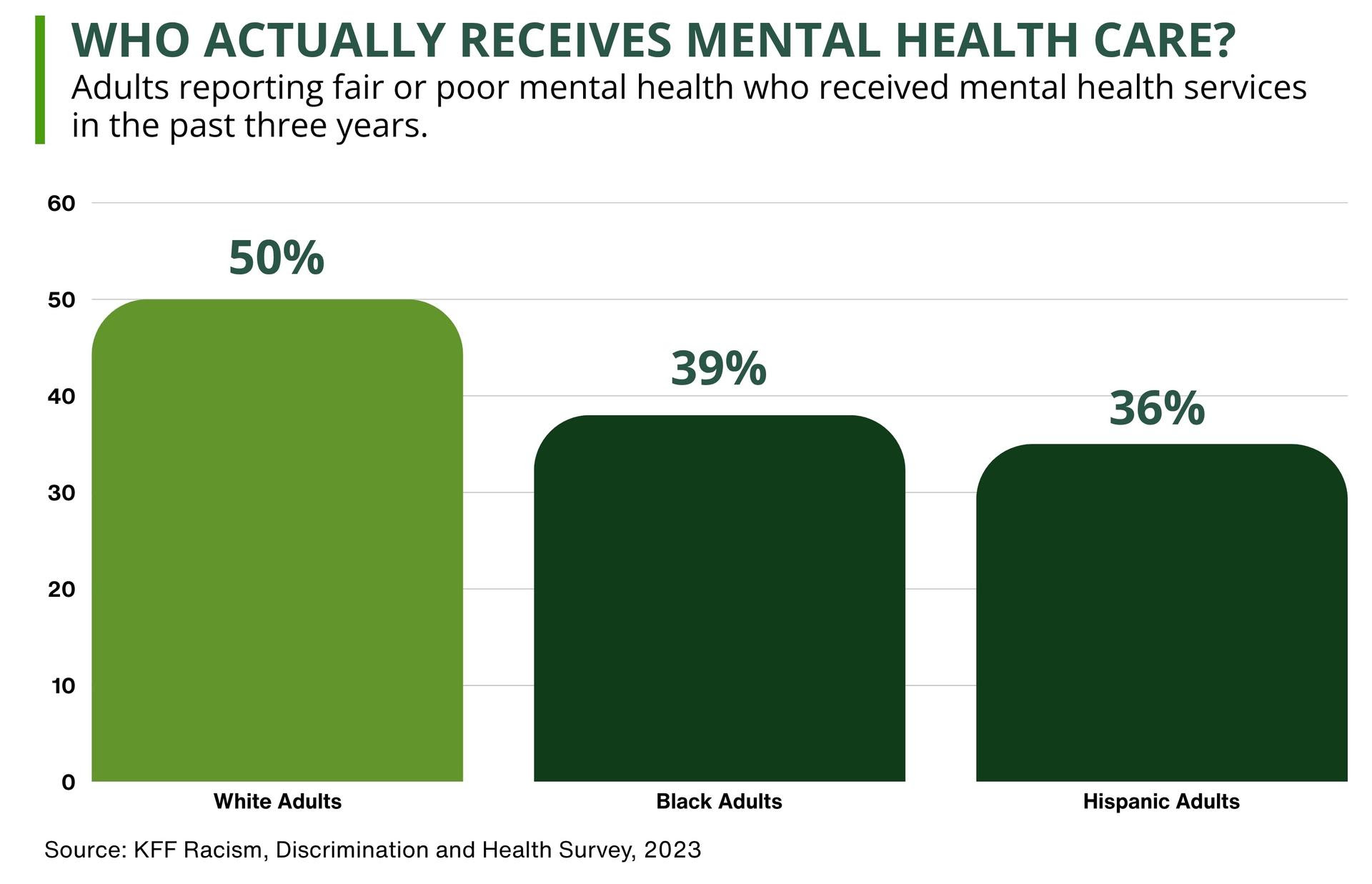
Here is what the data shows: communities of color do not experience mental illness at dramatically higher rates than white Americans. What they experience is dramatically less access to care, poorer quality of care, and a greater likelihood that their mental health needs will be met with punitive measures instead of treatment.
Consider what the research shows:
For many young people of color, the first "mental health intervention" they ever receive comes through the criminal legal system, not a clinic or community provider.
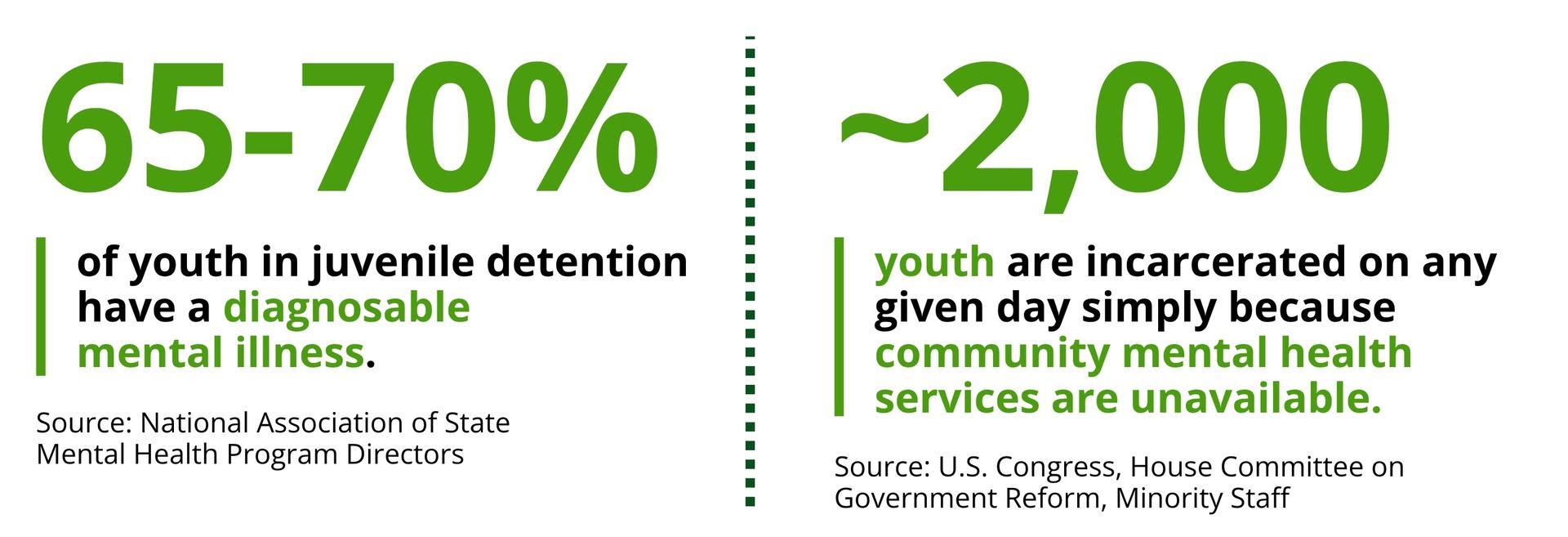
The United States has effectively made jails, prisons, and detention centers its largest providers of mental health "care," a role they were never designed for. And the numbers are staggering:
And because Black individuals are incarcerated at nearly five times the rate of white Americans, and Hispanic/Latino individuals at roughly 1.3 times the rate, these failures land hardest on the very communities already navigating the fewest resources.
The pipeline is painfully predictable. If a young person grows up amid chronic stress, community violence, economic instability, or the incarceration of a parent or family member, which the CDC recognizes as an Adverse Childhood Experience, their trauma shows up as behavior. That behavior is met with school discipline, then policing, then a courtroom. This can result in an untreated mental health need becoming a criminal record. Incarceration then compounds the original trauma, and the cycle deepens… for the individual, their family, and their community.
This is not a series of individual failures. It is a system functioning exactly as it was built. And it is why we insist that mass incarceration must be understood as a public health crisis.
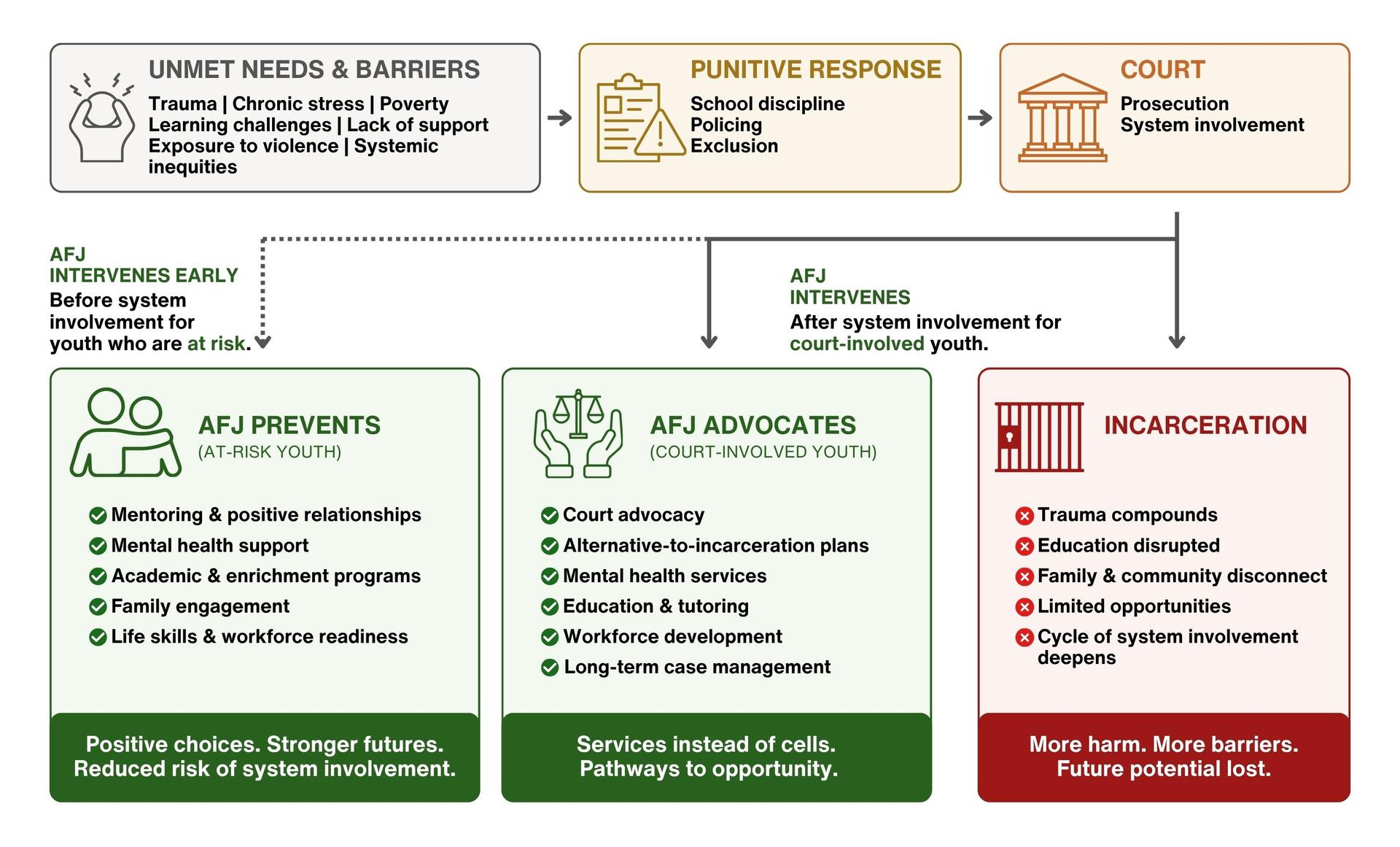
For nearly 50 years, AFJ has offered New York City an alternative: services instead of cells. Increasingly, mental health and wellness sit at the center of that work. Our approach includes:
Minority Mental Health Awareness Month matters because naming a problem is the first step toward addressing it. But awareness alone will not close the gap between the 70% of detained youth living with mental illness and the fraction who receive meaningful care.
What closes that gap is investment: in community-based alternatives to incarceration, in culturally responsive mental health care, in safe spaces and supportive adults, and in the organizations doing this work every day in the communities most affected.
This July, we invite you to move with us from awareness to action. Learn about our programs, share this conversation, and support our work as we continue building community-rooted mental health support for the young people who need it most.