

Avenues for Justice
100 Centre Street, Room 1541
New York, NY 10013
info@avenuesforjustice.org
©Copyright 2022 Avenues for Justice. All rights reserved.


What happens to a community’s mental health when generations of families live with incarceration, chronic stress, economic instability, and constant exposure to trauma?
This is a question the United States rarely asks when discussing mass incarceration and justice system involvement. The national conversation often focuses on crime rates, public safety, incarceration statistics, or individual outcomes. But far less attention has been given to the emotional and psychological impact these systems have had on families, children, and entire communities over generations.
For many families, justice system involvement is not experienced as a single event. It is part of a larger ecosystem shaped by chronic stress, surveillance, family separation, grief, and economic hardship that can begin in childhood and continue across generations.
At Avenues for Justice (AFJ), we work with young people every day who are navigating the consequences of all these realities.
And what becomes clear through that work is that justice system involvement does not begin in a courtroom and it does not end when someone goes through reentry. The impact reaches far beyond the individual. It affects family dynamics, childhood development, emotional well-being, educational opportunity, and community health overall.
To understand the mental health realities facing many young people today, we must also understand the systems and historical conditions that helped shape them.
The United States incarcerates more people than any other country in the world. African Americans are incarcerated at rates nearly five times higher than white Americans, while Hispanic communities are also disproportionately represented throughout the criminal legal system. These disparities are not accidental.
Robin D. Stone, Certified Poetry Therapist and Clinical Director of Muse & Grace Mental Health Counseling Services, brings this work directly into our AFJ HIRE Up programming. What she witnesses while working with AFJ Participants captures what the data alone cannot:
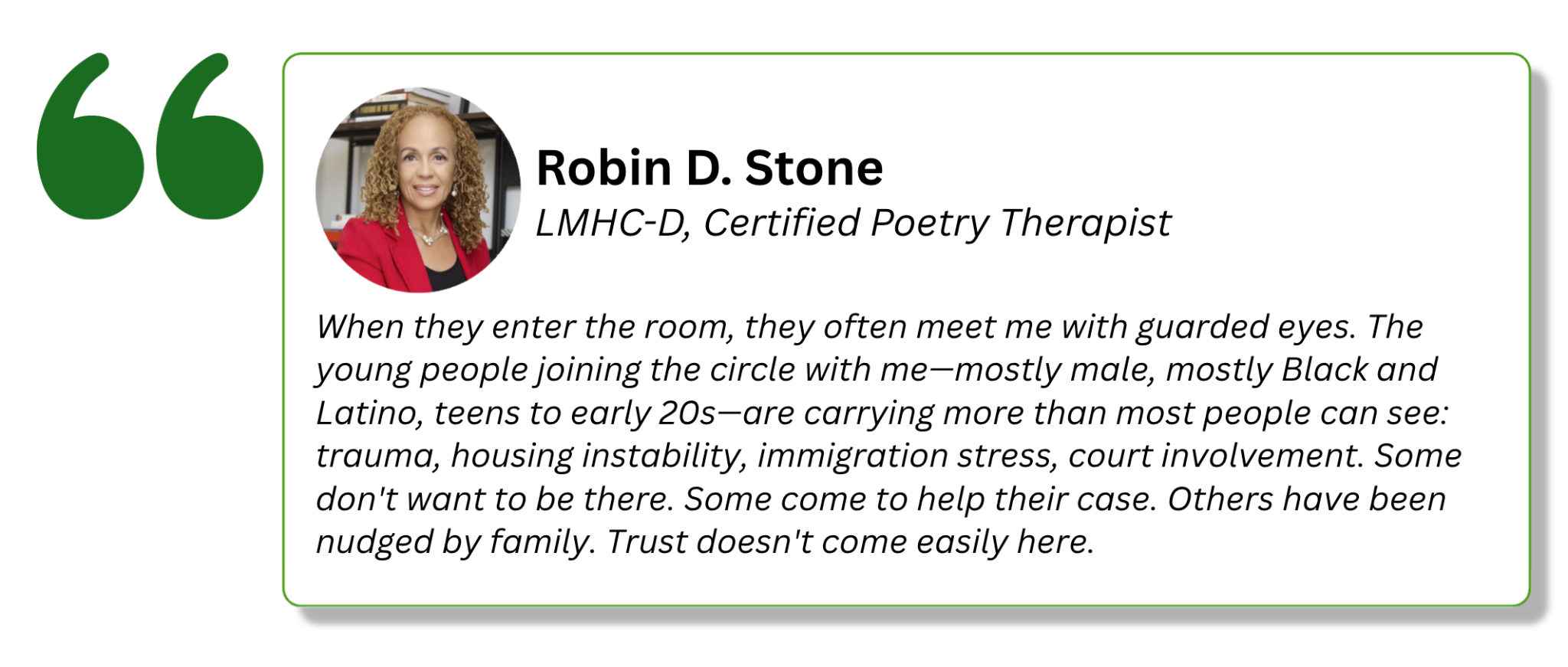
For many Black and Brown youth, exposure to the criminal legal system begins early. A young person may grow up with a parent who is incarcerated, a sibling navigating court involvement, or extended family members cycling in and out of the system. In some communities, incarceration has become so normalized that children learn at an early age to navigate the absence of family members, the fear of police interaction, and the instability that follows economic disruption and family separation.
Research consistently shows that these experiences have lasting mental health consequences. Studies from the Centers for Disease Control and Prevention identify parental incarceration as an Adverse Childhood Experience (ACE), placing children at greater risk for anxiety, depression, behavioral health challenges, substance use disorders, chronic stress, and long-term health complications later in life. According to research published by the National Survey of Children’s Health, children with incarcerated parents are significantly more likely to experience emotional and developmental difficulties than their peers.
But the mental health impact extends beyond incarceration itself. Chronic exposure to systemic bias creates what public health researchers often describe as “toxic stress.” Over time, this can affect emotional regulation, cognitive development, physical health, academic engagement, and long-term psychological well-being.
And yet, these realities are often misunderstood. As Robin observes, "behaviors connected to chronic stress and trauma are frequently mislabeled, and the broader context is ignored. Over time, as they realize they won't be graded or assessed or judged, something begins to shift." This is the foundation that trauma-informed work is built on, creating the conditions for trust before anything else can happen.
This is one of the reasons why the language surrounding justice-involved youth matters.
For years, many organizations, including those within the alternatives to incarceration field, have relied on messaging centered around “saving young people,” “second chances,” or “public safety.” In many cases, this language was adopted because organizations needed narratives that felt fundable, accessible, and politically safe within philanthropy and public policy spaces.
But these frameworks can unintentionally oversimplify the issue. They suggest that the primary problem is individual decision-making rather than the conditions and systems shaping people’s lives long before court involvement occurs.
This does not mean young people lack agency or responsibility for their choices. But it does mean their lives cannot be understood outside of the broader systems shaping their environments. Robin describes how her work creates space for exactly this kind of deeper understanding: "We explore identity, who they are beyond labels or assumptions, and how culture shapes that understanding. We make space for feelings that are often suppressed. We examine relationships, how they influence, harm, and heal. We practice setting boundaries and consider choices as opportunities to shape different outcomes."
Mental health conversations that focus only on individual behavior without examining structural conditions will always remain incomplete.
This is why it is important to reframe mass incarceration as a public health issue.
Public health approaches ask different questions. It examines root causes rather than only outcomes. It explores how housing, education, economic opportunity, neighborhood conditions, trauma exposure, access to care, and systemic inequities shape long-term well-being. And when viewed through this lens, it becomes clear that mass incarceration has had devastating, generational public health consequences in the communities which AFJ serves.
Over the years, our work has made increasingly clear that long-term stability cannot be addressed through court advocacy and workforce development alone. In response, AFJ continues to expand its approach to mental health and wellness through trauma-informed and community-rooted support that includes mental health education, emotional wellness programming, group therapy cohorts, art therapy, mentorship, and partnerships that help connect young people to culturally responsive care and long-term support. Mental health is not only personal.
The methodology behind this work is as intentional as it is human:
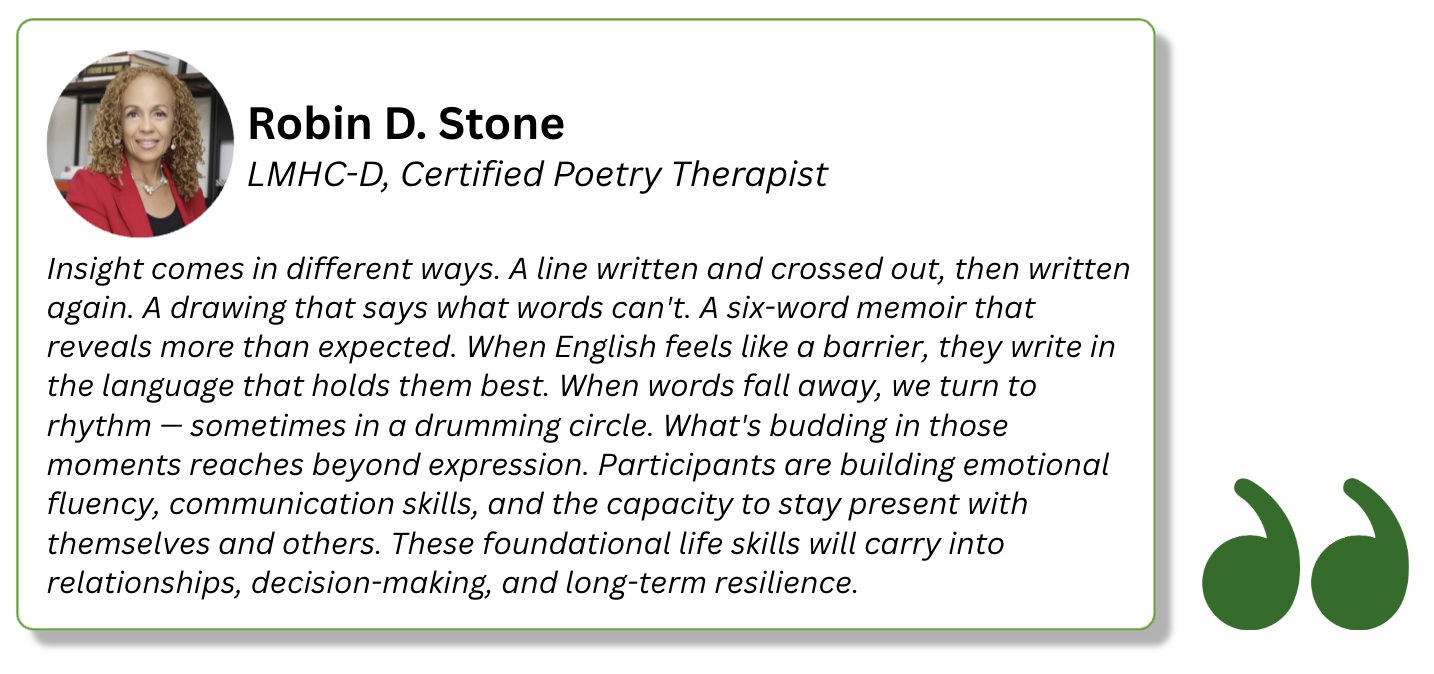
And over time, something visible begins to take root:
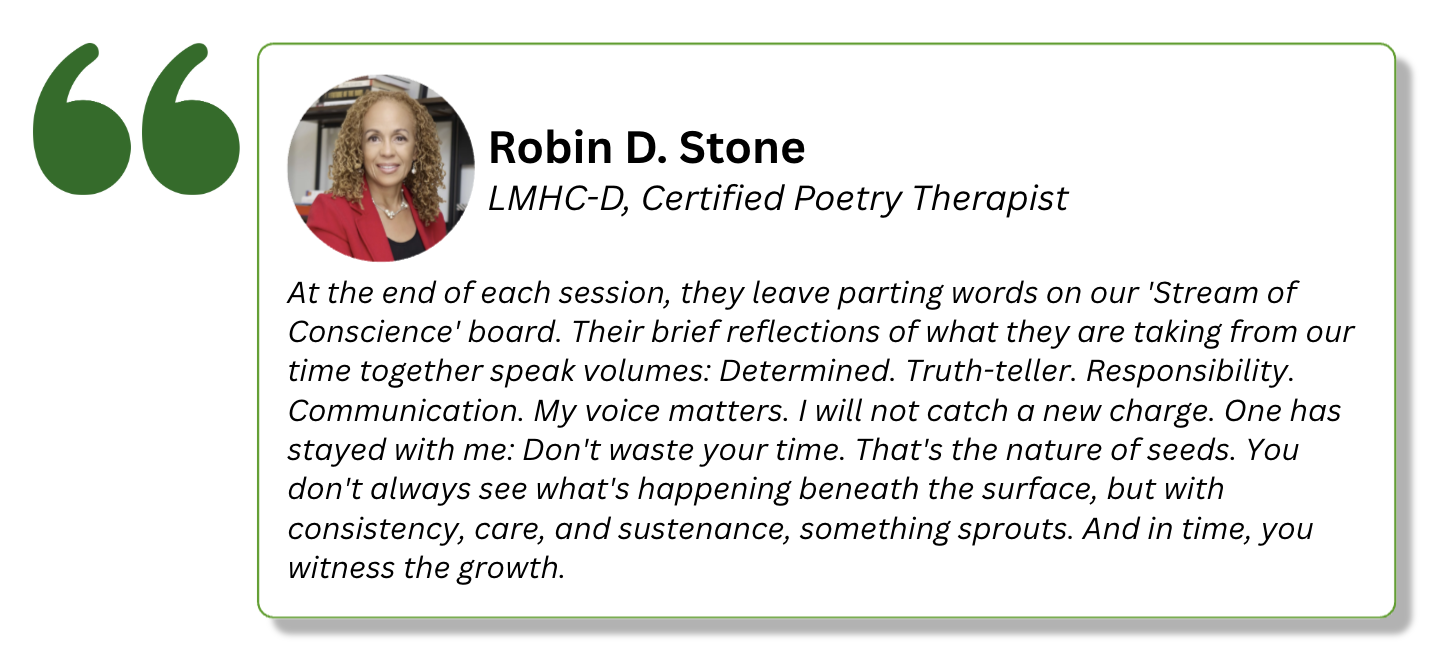
The nonprofit sector and funders need to have more honest conversations about what communities have been carrying and what true healing and long-term investment will require moving forward.
We hope that you will partner with Avenues for Justice as we continue to strengthen and expand community-rooted mental health and youth development initiatives.