

Avenues for Justice
100 Centre Street, Room 1541
New York, NY 10013
info@avenuesforjustice.org
©Copyright 2022 Avenues for Justice. All rights reserved.


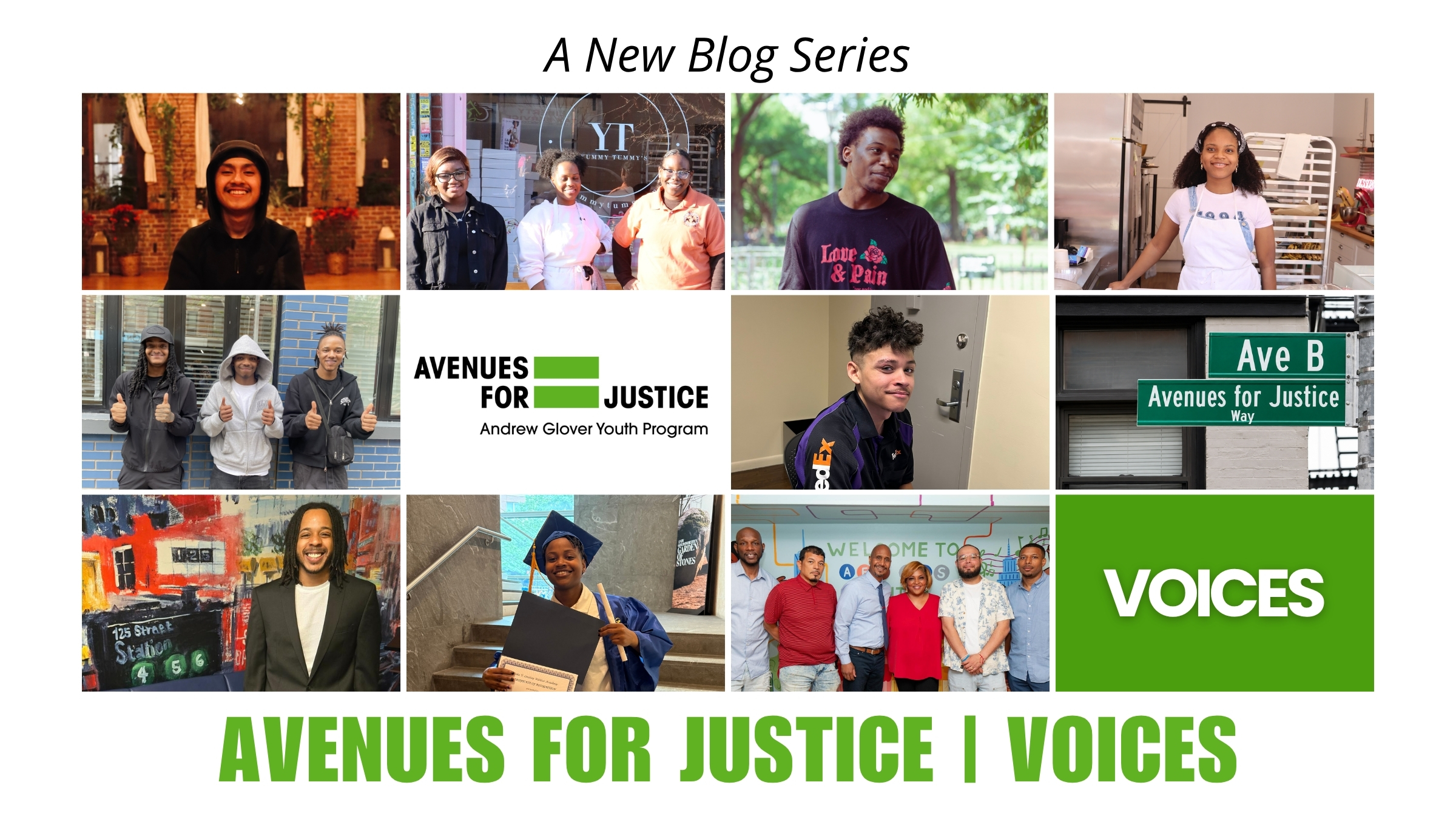
Every May, Mental Health Awareness Month invites us to focus on access to care, stigma, and individual well-being.
At Avenues for Justice (AFJ), we believe raising awareness around mental health is critical. It helps to break the stigma about seeking support and it expands the understanding that mental health is part of overall health wellness. But what is missing from the national conversation is a deeper examination of how mental health is shaped in this country. The narrative always focuses on personal experiences or access to services and not the systems that produce and sustain trauma and mental health challenges.
If institutions are truly serious about addressing and providing resources towards mental health the national conversation must address the structural conditions that shape entire communities. One of the most damaging systems in this country is mass incarceration. For decades, mass incarceration in this country has been framed as an issue of public safety. This framing suggests that the primary function of the system is to protect communities by removing individuals who have caused harm. But it doesn’t stop there. Even many alternatives to incarceration programs designed to keep people out of the system are often framed through the same lens, positioning their work to “improve public safety.” While these programs are critical, the language still centers safety as the outcome, rather than addressing the underlying conditions that produce harm in the first place.
This narrative of public safety obscures a more complex and troubling reality: mass incarceration operates not only as a legal system, but as a public health crisis that has had profound and lasting effects on the mental health of Black and Brown communities, particularly young men.
The United States incarcerates more people than any other country in the world. According to data from the Prison Policy Initiative, nearly 2 million people are currently incarcerated across federal, state, and local systems. When you expand that lens to include probation, parole, and other forms of system supervision, the number grows to over 5 million individuals.
African Americans are incarcerated at rates nearly five times higher than white Americans. Hispanic individuals are incarcerated at roughly 1.3 times the rate of white individuals. For African American men in particular, the likelihood of incarceration over a lifetime remains alarmingly high, especially in communities already impacted by economic disinvestment and structural inequality.
Mass incarceration is not a series of isolated incidents. It is a system that has, over generations, shaped the economic, social, and psychological conditions of entire communities.
When we talk about mental health in the context of incarceration studies from the Bureau of Justice Statistics show that people who are incarcerated experience significantly higher rates of mental health conditions than the general population, including depression, anxiety, and post-traumatic stress. But the impact begins long before incarceration and continues long after release. For many Black and Brown young men, exposure to the criminal legal system starts early. It may begin with over-policing in neighborhoods, school disciplinary practices that mirror punitive systems, or family members who have already been incarcerated. These experiences create a baseline of stress and hypervigilance that shapes how individuals move through the world.
Chronic exposure to stress and trauma affects the nervous system, increases cortisol levels, and contributes to long-term mental health challenges. The American Psychological Association has consistently highlighted the connection between sustained stress and conditions such as anxiety disorders, depression, and substance use.
By the time an individual becomes directly involved in the system, they are often already carrying the weight of these experiences. Once incarcerated, that burden deepens. Separation from family, exposure to violence, lack of consistent mental health care, and the loss of autonomy all contribute to further psychological harm. Upon reentry, individuals face additional barriers and many of which are structural and persistent.
There is a common narrative that incarceration is followed by a “second chance.” It is a phrase that has been widely used across nonprofit organizations, policy discussions, and philanthropic messaging. It is a phase that the Avenues for Justice used for many years. But as we move forward in this next chapter in the organization’s history, we understand this framing is misleading. Because reentry is a continuation of systemic constraints.
Individuals returning from incarceration face significant barriers to employment, housing, and civic participation. In many states, formerly incarcerated individuals are restricted from voting, limiting their ability to engage in the democratic process. Employment opportunities are often constrained by background checks and stigma, even when individuals are qualified for roles. These barriers are built into the system. And the economic impact is immediate. When a person is incarcerated, families often lose a primary source of income. In many cases, families also incur additional financial burdens, including the cost of supporting a loved one while they are incarcerated, which includes paying for phone calls, commissary items, and legal expenses.
The result is a cycle of economic instability that compounds over time. And the reality is -economic instability is not separate from mental health. Research consistently shows that financial stress is closely linked to mental health challenges, including depression and anxiety. For families already operating with limited resources, the added strain of incarceration can create conditions of chronic stress that affect both adults and children. Children in these families are more likely to experience emotional and behavioral challenges, disruptions in education, and long-term impacts on their own mental health and development. This is how trauma becomes generational.
Organizations working within this space, including those providing reentry support and alternatives to incarceration, see these patterns every day. They understand that the individuals they serve are not starting from a neutral baseline. They are navigating systems that have shaped their experiences long before they entered a program.
And yet, even within the nonprofit sector, the language used to describe this work has often reinforced incomplete narratives. Terms like “second chances” and “giving back” are frequently used to make the work more accessible or more fundable. These phrases can signal redemption and hope, but they also subtly center the idea that the issue is primarily about individual behavior, rather than systemic design.
This is not simply a matter of semantics. Language shapes understanding. When we frame the issue as one of individual redemption, we risk ignoring the broader conditions that led to system involvement in the first place. We shift the focus away from structural accountability and toward personal responsibility, which can make it easier to overlook the role of policy, history, and institutional practices.
It is also important to acknowledge that this language exists because many organizations that are led by people of color have had to navigate funding environments that reward certain narratives. In order to secure resources, we have often been required to present our work in ways that feel safe or palatable to funders and donors. This has included adopting language that aligns with dominant perspectives, even when it does not fully reflect the reality of the communities we serve.
Reframing the Conversation
If we are going to meaningfully address mental health, we need to expand the frame. Mental health is not only about awareness, reducing stigma, or supporting individual care. It is about the conditions in which people live, work, and exist. It is shaped by policies, systems, and historical patterns that determine who has access to stability and who does not.
Mass incarceration is one of the most violent and harmful systems that has shaped family structures, economic opportunities, and community dynamics for centuries Reframing mass incarceration as a public health issue does not diminish concerns about safety. It broadens the conversation to include the full scope of impact in our society today.
Avenues for Justice believes this reframing creates space for different types of solutions. Public health approaches prioritize prevention, early intervention, and community-based support. This is the work that we do every day. The public health approach focuses on addressing root causes rather than managing outcomes after the fact. This means investing in education, economic opportunity, mental health services, and community infrastructure, so that so many Black and Brown young men do not systematically become involved with the criminal justice system.
Mental Health Awareness Month offers an opportunity to deepen the conversation. Over the coming months, there will be a continued exploration of the history and impact of mass incarceration in the United States: how it was built, how it functions, and what it has done to communities over time. This will include centering the lived experiences of individuals and families who have navigated these systems, as well as examining the policies and practices that have sustained them.
It is about naming a reality that has existed for generations. If we are serious about mental health, we must be serious about the systems that shape it. And that requires moving beyond narratives that focus solely on individuals, toward a more honest and comprehensive understanding of the structures that influence their lives.